The medieval meal: what did people really eat in the Middle Ages?
What did a medieval meal actually look like? Far from the cliche of gnawed drumsticks and overflowing tankards, medieval gastronomy was a sophisticated art governed by strict rules about spices, presentation and the balance of flavours. From royal banquets to humble tavern suppers, the food of the Middle Ages tells a rich story of trade, medicine and social hierarchy. This article explores that story and shows how Taverne de l'Oratoire in Grasse keeps it alive on the plate.
Contents
The structure of a medieval banquet
A grand medieval banquet was an elaborate affair, divided into distinct courses called 'mets' or 'services'. Unlike the modern sequence of starter, main and dessert, a medieval feast could comprise four, five or even six services, each containing multiple dishes served simultaneously.
The meal typically began with light preparations designed to open the stomach: fruits, salads dressed with vinegar, and small pastries. Then came the potages, thick soups and stews often thickened with bread or almonds. The main services featured roasted meats, including poultry, game and sometimes spectacular centrepieces such as a roast swan or peacock re-dressed in its feathers.
Between courses, 'entremets' provided both entertainment and refreshment. These could be anything from jellied dishes and sweet fritters to elaborate mechanical devices paraded through the hall. At the grandest banquets of the French and Burgundian courts, entremets included musicians playing from inside enormous pies and fully rigged model ships sailing across the table.
The meal concluded with the 'issue de table', a course of dried fruits, confectionery and spiced wines, most notably hypocras. This final course was believed to aid digestion, reflecting the medieval belief that food and medicine were closely linked. A meal was not merely sustenance but a carefully orchestrated experience of taste, spectacle and social ritual.
What people ate in a medieval tavern
While royal banquets were extravagant, the daily fare of the common people was simpler but far from bland. In a medieval tavern, the backbone of the menu was pottage, a thick soup of vegetables, grains and sometimes meat simmered for hours over an open fire. Bread was the staple accompaniment, often used as a plate itself: thick slices called 'trenchers' soaked up the juices of the meal and were eaten last or given to the poor.
Roasted or spit-turned poultry was the most popular meat in taverns. Chicken and capon were affordable and widely available, while goose and duck appeared at feasts. Pork was eaten in every form imaginable, from sausages and pates to salted hams that could be stored through the winter. Beef was less common and more expensive, reserved for wealthier diners.
Fish played a vital role in the medieval diet, not least because the Church imposed fast days on which meat was forbidden. Fresh fish, salted herring and stockfish were staples, and recipes for fish in sauces flavoured with verjuice, mustard and herbs survive in numerous manuscripts.
Dairy products, eggs, legumes and seasonal vegetables rounded out the tavern table. Contrary to the popular myth that medieval people ate nothing but meat, their diet was often surprisingly varied. Turnips, cabbages, onions, peas and broad beans were common, and orchards supplied apples, pears, cherries and plums for both cooking and fresh eating.
Spices: the gold of medieval cuisine
If one element defined medieval cookery more than any other, it was spices. Cinnamon, ginger, cloves, nutmeg, saffron, galangal and long pepper were used with a generosity that would astonish a modern chef. They were not, as is sometimes claimed, used to mask the taste of spoiled meat; rather, they were markers of wealth, sophistication and culinary knowledge.
Spices arrived in Europe via complex trade routes that stretched from the Moluccas, Ceylon and India through the ports of Venice, Genoa and Constantinople. Their cost was enormous: a pound of saffron could equal a month's wages for a skilled labourer, and pepper was sometimes used as currency. Possessing and using spices at the table was a powerful statement of status.
Medieval cooks combined spices in ways that may seem unusual to modern palates but were guided by the prevailing medical theory of the four humours. Each food was classified as hot, cold, moist or dry, and spices were used to achieve balance. Ginger, considered hot and dry, was added to fish, classified as cold and moist. Cinnamon warmed cold dishes, while vinegar cooled hot ones.
Hypocras is perhaps the most enduring legacy of this spice-rich culinary tradition. A blend of wine, honey, cinnamon, ginger and cloves, it encapsulates the medieval philosophy that food and drink should be both delicious and health-giving. At Taverne de l'Oratoire, our artisanal hypocras is made with whole spices in the traditional manner, offering a direct taste of this remarkable culinary heritage.
Drinks of the Middle Ages: mead, hypocras and beyond
Water in medieval towns was often unsafe to drink, so most people relied on fermented beverages. Wine was the drink of the south, beer and ale dominated the north, and mead, cider and perry filled regional niches across Europe.
Mead, fermented from honey and water, was one of the oldest drinks consumed in medieval Europe. Monasteries were major producers, using the honey from their own hives. At its best, mead was a complex, aromatic drink that ranged from bone-dry to lusciously sweet. It was served at banquets, in taverns and at weddings, where the custom of drinking mead for a full month after the ceremony gave us the word 'honeymoon'.
Hypocras, the spiced wine sweetened with honey, was the prestige drink of the period. It was served at the close of grand meals as both a digestif and a health tonic. Recipes varied by household, but cinnamon, ginger, cloves and a touch of long pepper were almost universal ingredients. Both red and white versions existed, each with its own character.
Ale and beer were the everyday drinks of northern Europe. Before the widespread use of hops in the 15th century, ale was flavoured with a blend of herbs called 'gruit', giving it a flavour quite different from modern beer. Cider was popular in Normandy and Brittany, while perry, made from fermented pears, had its own following.
At Taverne de l'Oratoire, we celebrate this heritage by offering artisanal mead and hypocras alongside our medieval-inspired menu. These drinks are not historical curiosities but living traditions, crafted by French producers who honour centuries-old methods.
How Taverne de l'Oratoire recreates the medieval feast
Recreating medieval gastronomy is not about slavish reproduction. Many medieval ingredients are no longer available, and modern palates have evolved. What Taverne de l'Oratoire aims to capture is the spirit of medieval dining: the warmth, the generosity, the bold flavours and the sense of shared celebration.
Our kitchen draws on historical recipes from sources such as 'Le Viandier' of Taillevent, 'Le Menagier de Paris' and 'Du fait de cuisine' by Maitre Chiquart. These texts provide a wealth of detail about ingredients, techniques and flavour combinations. Our chefs adapt these recipes for modern produce and hygiene standards while preserving the essential character of the original.
The signature poularde with mustard and honey sauce is a perfect example. Poultry was the most common meat in medieval taverns, and the combination of mustard and honey appears in multiple historical sources. Our version uses free-range poultry, whole-grain mustard and local Provencal honey, creating a dish that is both historically informed and thoroughly delicious.
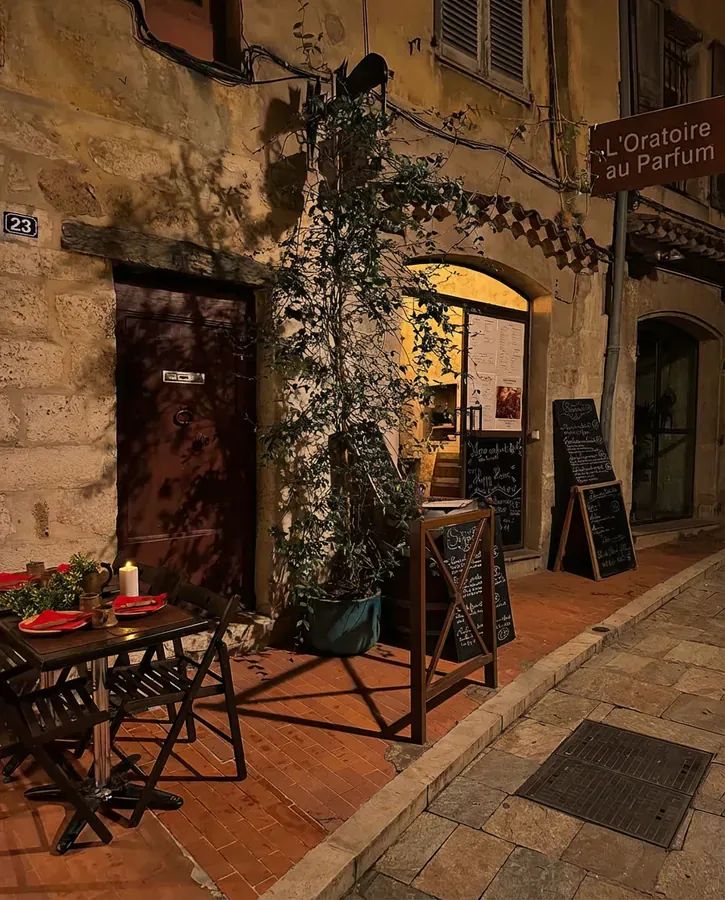
The setting reinforces the experience. The stone walls, low ceilings and candlelight of the restaurant are not decorative choices but natural features of a building in the medieval heart of Grasse. Drinks are served in stoneware tankards and chalices. During our monthly medieval evenings from October to March, live music and period costumes complete the picture.
We believe that understanding the history of what you eat and drink makes the experience richer. That is why we share these stories, on our blog and at the table. Come and taste history at Taverne de l'Oratoire, 23 rue de l'Oratoire, 06130 Grasse. Book on 04 93 66 57 97.
Questions Fréquentes
Did medieval people really eat with their hands?+
Partly. Forks were rare until the late Middle Ages. Diners used knives, spoons and their fingers, following strict etiquette about cleanliness. Bread trenchers served as plates. At Taverne de l'Oratoire, we provide modern cutlery but embrace the spirit of communal, generous medieval dining.
Were medieval spices used to hide bad food?+
No. This is a persistent myth. Spices were extremely expensive, far costlier than fresh meat. They were used to display wealth, create complex flavours and balance dishes according to the medical theory of the four humours.
What is the difference between a medieval banquet and everyday tavern food?+
A royal banquet featured multiple elaborate courses, spectacular centrepieces and prestigious drinks like hypocras. Tavern food was simpler: pottage, roasted poultry, bread and ale. Taverne de l'Oratoire draws on both traditions for its menu.
What does a medieval menu look like at Taverne de l'Oratoire?+
A medieval menu follows the old sequence of courses: sharing boards, terrines and charcuterie to start, then a poultry dish such as the poularde with mustard and honey sauce, served with period produce like chestnuts and chickpeas. Artisanal medieval drinks, mead and hypocras, accompany the meal through to dessert, in the manner of medieval tables.
Does Taverne de l'Oratoire serve historically accurate medieval food?+
Our menu is inspired by genuine medieval recipes from sources like 'Le Viandier' and 'Le Menagier de Paris', adapted for modern ingredients and food safety. The flavour principles, especially the use of honey, mustard and spices, are authentically medieval.