Visiting Grasse: the historic centre and its medieval restaurant
Grasse is world-famous for its perfume heritage, but the town has far more to offer than fragrance factories. Its medieval historic centre is a treasure trove of narrow lanes, ancient fountains and centuries-old buildings. At the heart of it all, Taverne de l'Oratoire brings the town's medieval past to life through authentic cuisine, artisanal mead and hypocras. This guide helps you plan a perfect day in Grasse, from the perfumeries to the old quarter and, of course, the table.
Contents
Grasse's medieval heritage: a living history
Grasse was founded in the early Middle Ages and became a significant town by the 11th century, when it established itself as an independent republic allied with Pisa and Genoa. The remnants of that era are woven into every street of the old quarter. The Cathedral of Notre-Dame du Puy, built in the 12th century, dominates the skyline with its austere Romanesque facade. Inside, works by Rubens and Fragonard hang almost casually, a reminder that this small Provencal town once wielded considerable wealth and influence.
The streets themselves are the real museum. Winding lanes barely wide enough for two people snake between tall stone houses, opening suddenly onto tiny squares with moss-covered fountains. The Place aux Aires, the old tanning square, is now home to a daily flower and produce market that fills the air with fragrance long before you reach any perfumery.
For visitors who love medieval architecture, Grasse offers a remarkably intact ensemble. The Porte du Cours, the old rampart walls and the network of covered passages known as 'traboules' all survive. Unlike many Provencal towns that have been heavily restored, Grasse retains a genuine, lived-in quality. The stone is weathered, the shutters are faded, and the cats doze on doorsteps as they surely have for centuries.
Perfumeries and workshops: the fragrant side of Grasse
Grasse became the world capital of perfumery in the 16th century, when Catherine de Medici popularised scented gloves at the French court. The town's microclimate, sheltered from the mistral and bathed in Mediterranean sun, proved ideal for growing jasmine, rose, tuberose and lavender. Today, three historic perfume houses offer tours and workshops that are among the most popular attractions on the Cote d'Azur.
Fragonard, founded in 1926, occupies a handsome 18th-century building and offers free guided tours of its factory and museum. Molinard, dating from 1849, allows visitors to create their own fragrance in a hands-on workshop lasting about an hour. Galimard, established in 1747, is the oldest of the three and offers a similar perfume-creation experience in elegant surroundings.
A perfumery visit pairs beautifully with a meal at Taverne de l'Oratoire. The medieval spice trade was, after all, the precursor to the perfume industry: cinnamon, cloves, ginger and cardamom were as prized for their scent as for their flavour. Sitting down to a glass of hypocras after a perfume workshop is a way of connecting two chapters of the same aromatic story.
Most perfumery tours last between 45 minutes and two hours, depending on whether you opt for a simple visit or a full workshop. Combined with a stroll through the old town and dinner at the Tavern, this makes for a richly layered half-day or full-day excursion.
Taverne de l'Oratoire: medieval dining in the heart of Grasse
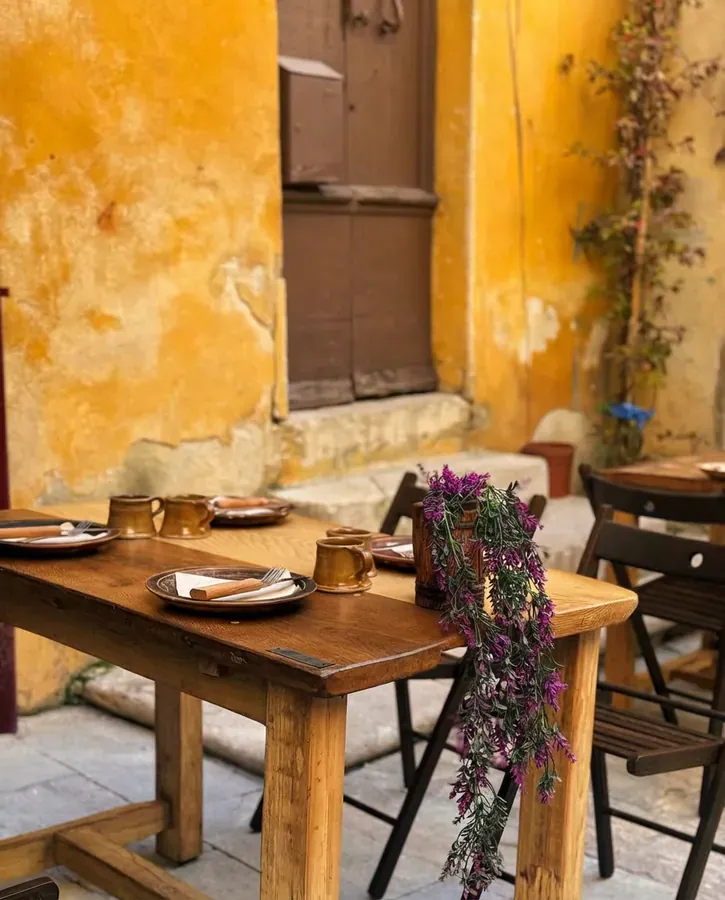
At 23 rue de l'Oratoire, in one of the oldest lanes of the historic centre, Taverne de l'Oratoire is both a restaurant and a portal to the past. The building's stone walls, low ceilings and intimate proportions are original, creating a setting that needs no artificial embellishment to feel authentically medieval.
The kitchen serves dishes inspired by the culinary traditions of the Middle Ages, with prices between 17 and 24 euros per main course. The star of the menu is the poularde with mustard and honey sauce, a dish that combines the richness of free-range poultry with a sweet-sharp sauce rooted in medieval flavour principles. Seasonal specials and hearty slow-cooked options round out the offering.
The drinks list is where the Tavern truly distinguishes itself. Artisanal mead, the ancient honey wine beloved by monks and warriors alike, is available in varieties from dry to sweet. Hypocras, a spiced wine infused with cinnamon, ginger and cloves, is served in stoneware chalices. These are not novelty drinks but carefully sourced products from French artisanal producers.
The restaurant seats 50 indoors and 20 on the terrace, and it is open every evening from 6:30 PM, with lunch from Wednesday to Sunday between noon and 3 PM. Between October and March, monthly medieval evenings bring live entertainment, period costumes and a banquet atmosphere. Booking is recommended on all evenings: call 04 93 66 57 97 or reserve online.
The ideal day in Grasse: a suggested itinerary
To make the most of a visit to Grasse, arrive in the late morning. Begin with a stroll through the Place aux Aires market, where you can pick up local olives, honey and lavender sachets. From there, follow the signs to one of the three perfumeries for a guided tour or, better still, a fragrance-creation workshop.
After your perfumery visit, explore the medieval old town. Walk up to the cathedral, peer into the traboules, and take in the panoramic view from the Place du Cours, which stretches all the way to the coast on a clear day. If you enjoy art, the Musee d'Art et d'Histoire de Provence and the Musee Jean-Honore Fragonard are both worth a visit.
For lunch, Taverne de l'Oratoire serves from noon to 3 PM, Wednesday to Sunday. Alternatively, save the medieval experience for the evening and return for dinner, when the candlelight and the slower pace of the meal create a more atmospheric experience.
Before leaving Grasse, browse the artisanal shops that line the old quarter. You will find handmade soaps, perfumed candles, local honey and, in several boutiques, medieval-themed gifts and curiosities. A jar of Provencal honey and a bottle of artisanal mead from the Tavern make excellent souvenirs.
Whether you are based on the coast and visiting for the day or staying in the Grasse area, the combination of perfume heritage, medieval architecture and a meal at Taverne de l'Oratoire delivers one of the most complete and satisfying days out on the French Riviera. Book your table on 04 93 66 57 97.
Questions Fréquentes
What is there to see in Grasse besides the perfumeries?+
Grasse has a beautifully preserved medieval old town with a 12th-century cathedral, ancient lanes and covered passages, the Place aux Aires market, museums and panoramic views. Taverne de l'Oratoire, at 23 rue de l'Oratoire, brings the medieval heritage to life through cuisine.
Can I visit a perfumery and dine at the Tavern on the same day?+
Absolutely. Most perfumery tours last 45 minutes to two hours. Combined with a stroll through the old town, you can easily fit in a visit before lunch (noon to 3 PM, Wed-Sun) or before dinner (from 6:30 PM every evening).
Is Grasse worth visiting for a full day?+
Yes. Between the perfumeries, the medieval old town, the museums, the local markets and a meal at Taverne de l'Oratoire, Grasse easily fills a full and rewarding day. It is accessible from Nice (40 min), Cannes (20 min) and Antibes (25 min).